A 4th “I” for IBM’s “The 3 I’s of Smarter Content”

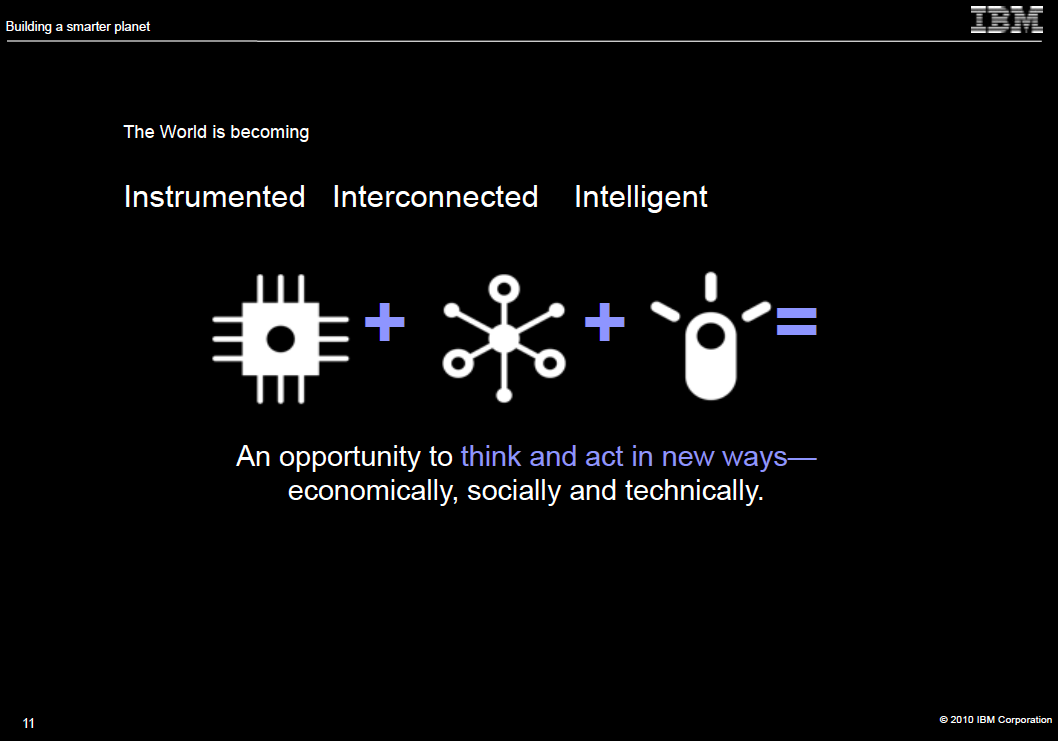
Sometime back, IBM summarized the information revolution as being something that will be enabled by the emerging trend of the 3 I’s. Technology is allowing everything to be instrumented and therefore automated and measured, its allowing everything to be interconnected and with all this data its allowing intelligence to make sense of everything and act on it in real time.
The 3 I's of IBM

The 3 I’s of IBM

The vision is described visually in this slide deck http://goo.gl/2tVDFk and is expounded upon by a professional communicator of IBM here http://goo.gl/bsKBxf so I wont belabour you with the merits of this great framework, rather I will proceed to make this suggestion, that the following trends is the last 5 years;

  • Drones
  • Robots
  • Autonomous Vechiles
  • Brain Computing Interfaces
  • Artificial Intelligence
  • Attempts to reproduce working digital models of human Neuro Anatomy and Machinery

require the edition of an additional I to the 3. That I is ‘Incarnation’. The word best summarises the fact that we are trying to provide a body to our AI to move and exist in the real world. It also captures the fact that we are trying to Anthropomorphise our software to make it seem more human and therefore easier to use and relate to and perhaps form emotional attachment. This incarnation is also now merging the real world and the virtual one, allowing an overlay of knowledge on the real world with technology like Augmented Reality or allowing machines a body to move and interact with the real world through robotics. I am sure the geniuses in IBM can take this concept further then I can.
The more sophisticated your users are…

“Our users aren’t sophisticated enough for such tools, is there a basic option?” 

The more sophisticated your users are, the less sophistication they need from their tools. 

DSC04661


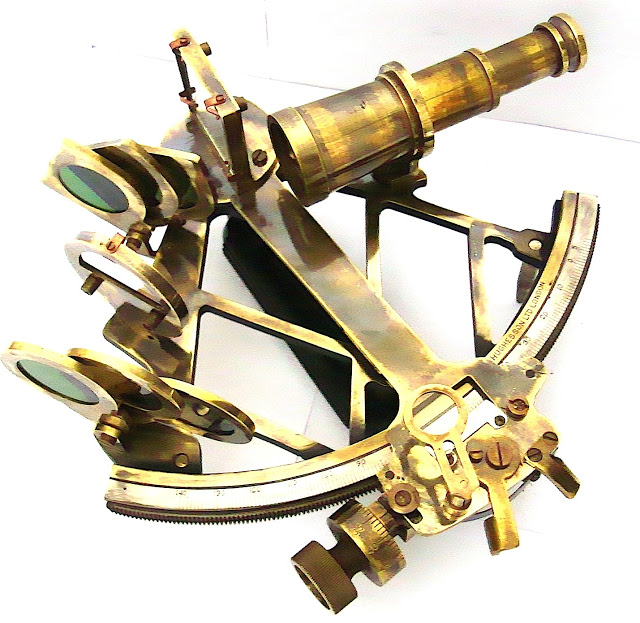
Think of the expert sailors of old, who navigated the seven seas with nothing but outdated print maps and a sextant. Expert level sailors today can still pull this off, but if you just got your first boat its probably going to look more like this;

500x407xoasis-bridge.jpg.pagespeed.ic.cYO2K8cI7e

One button fix all apps are usually needed by the less sophisticated users – which is ironic because these tools cost more as they require a lot of sophistication during the implementation. The modern CIO has to make a judgement call, if your users are simple you need sophisticated vendors, if your vendors are simple, you need sophisticated users.

monkey-typewriter-1

You will end up spending the money anyway – its either going to your payroll or to the contract with the vendors.

Zen: Beaten Paths reveal human behavior

An Architect (civil) friend told me a story about working around human behavior  that has stuck with me over the years and influenced my practice as an Architect of information systems.

The story is about an architect who was looking for a solution to the persistent problem of people not using sidewalks no matter how convenient they were. Eventually the foot traffic wore out new paths on the landscape and would be an eyesore.This architect had an idea, he would build all of his buildings, but defer the sidewalks. He would just plant grass. 6 months later he would come back and put sidewalks down where all the beaten paths emerged. By doing this he put the paths in the places that emerged from unpredictable trends of human behavior. This was the failure of all his counterparts, they were trying to predict those trends, and often got it wrong.

3184420588_9e6335b73e_b

The principle that I applied to my field of work is to leave interfaces and parts of information systems to the trends that emerge, rather than trying to dictate something that people wont use. The modern enterprise is a combination of policies, processes and services that have been designed top down, but they should meet grassroots movements and trends halfway, for maximum impact.

The story also carries a fashionable new big data lesson – if we can understand trends we can capitalize on actual human behaviour, rather than our inaccurate traditions of conjecture.