COGNITIVE COMPUTING is not ARTIFICIAL INTELLIGENCE

chappie-poster-sdcc

Sentience vs Artificial Intelligence 

There is Hollywood induced baggage to the term Artificial Intelligence, which assumes switching on a computer or robot with Sentience. Wikipedia defines Sentience as;

Sentience is the ability to feelperceive, or experience subjectively.[1] Eighteenth-century philosophers used the concept to distinguish the ability to think (reason) from the ability to feel (sentience). In modern Western philosophy, sentience is the ability to experience sensations (known in philosophy of mind as “qualia“). In Eastern philosophy, sentience is a metaphysical quality of all things that requires respect and care. The concept is central to the philosophy of animal rights, because sentience is necessary for the ability to suffer, and thus is held to confer certain rights.”
http://en.wikipedia.org/wiki/Sentience

The conventional definition of AI though when you key in “define Artificial Intelligence” in google is;

Artificial Intelligence is the theory and development of computer systems able to perform tasks that normally require human intelligence, such as visual perception, speech recognition, decision-making, and translation between languages.”

It is a gigantic leap from creating rational sub routines and emulating of human cognitive functions to having a machine that is sentient. That’s why to avoid doubt on a popular level, I rather use the term Cognitive Computing then AI.

The mystery of consciousness

So the AI we have today, is still a long way of from the sentient beings from our SciFi tradition. Our systems at present produce models and processes that simulate human cognition and function in very specific scenarios. Sometimes we anthropomorphise human interfaces and systems to make the user feel as if they were interacting with a sentient being. As for having a sentient machine, it will only happen after we have solved the great mystery of ‘human consciousness’, though many today question if it really exist or of if it is just an illusion of our internal dialogue machine that is constantly emulating consciousness to enable our self of self and others and then communicate with one another, because we are fundamentally a social species. The solution in the movie transcendence was to image various states of consciousness in an FMRI and reproduce it digitally despite not being able to define what it was, and then have to fused to a state-of-the-art Cognitive Engine.
http://goo.gl/BHXxtJ

Debate: On the Extinction of CIOs

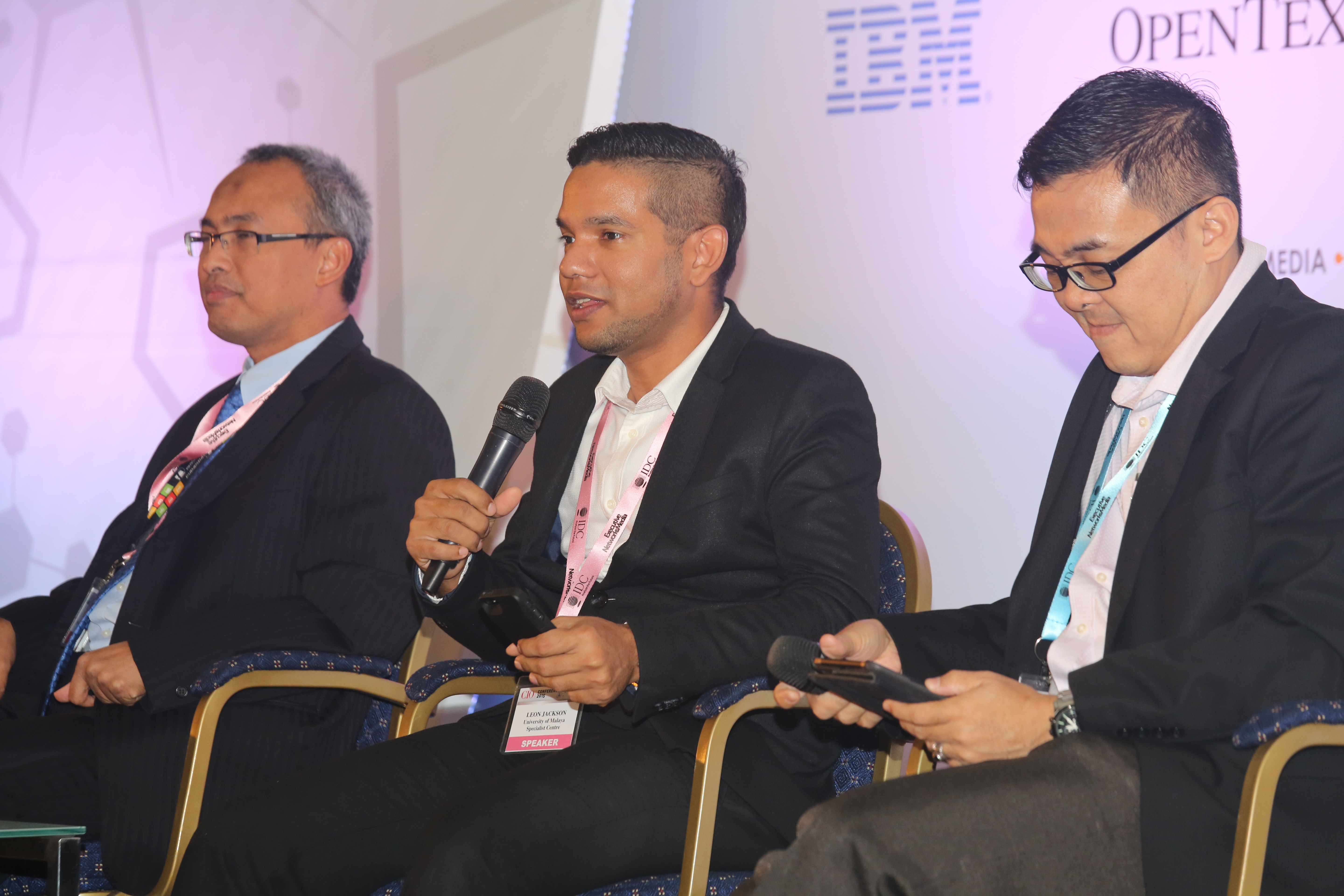
Speaking at IDC CIO Magazine Conference 2015. We had an interesting dialogue on the challenges we face and if we are becoming obsolete

Speaking at IDC CIO Magazine Conference 2015. We had an interesting dialogue on the challenges we face and if we are becoming obsolete

I will be on the debate team at the CIO Magazine Conference on the 23/04/2015. 

The question will be; “Soon, CIOs will become only operational and it will be the CXOs that will be the technology decision-makers!” Agree or Disagree?” 

Here is how I plan to answer;

Saturation of IT 

1. IT is a way of life, digital immigrants are still alive but the concept of migration has passed

2. Consumer IT is now more important then Enterprise IT because people bring their talent, capital and assets with them to work and much of these are embedded in some sort of IT

3. The concept of an IT specialist is quickly becoming archaic and somewhat quaint

4. In a sense connectivity, data and processing will become a utility like water and electricity, and no one will care how it reaches them, they will only complain when it doesn’t and try to get away with paying as little as they can

Software Engineering and Computer Science 

1. Behind the utility there is serious science to keep the flow efficient, relevant and secure

2. Some services eventually will be recognised as critical national infrastructure and funded from the public coffers

3. Others will be platforms on which SAAS and BPAAS will keep being rolled out to create new opportunities for revenue

4. No matter how popular the notion of democratisation and decentralisation of IT becomes, there will always be a real science and engineering behind it that differentiates the professionals from the rest and the challenge will be one of funding from these talent and services

Evolution of the CIO 

1. Some CIOs are purveyors of information and counsellors to the King – the one who knows where to find the answers and anticipates the questions. This type will always be needed and will strengthen themselves with data science and big data. Their also the type likely to move on to be CEO or be chosen to be an acting one when CEOs need to be replaced.

2. Some CIOs are operational mavens and lubricants of process – these will make the transition to be COO.

3. Some CIOs are covert business development and strategy generals – these will enjoy the new world of social and marketing possibilities and move on to be the new generation of CMOs. Marketing is a discipline that will soon transition from art to science and when it does, it will have more IT running it. For example, Google is the world’s biggest advertising firm by revenue today.

4. Some CIOs are seen as witch doctors, the ones who understand tech and deal with those impossible and socially inept programmers. These guys are at risk for loosing scope and value. Some in highly technical industries, will always be needed and may change their title to CTO to better reflect their role.

Who will choose Technology 

1. I think its a given that as technology becomes popular and less mysterious, many other stakeholders apart from IT will want to be part of the decision and it will no longer be the sole domain of the CIO

2.The CIO though must continue to play the role of architect, making sure the company chooses technology that is efficient, relevant and secure

Cloud challenges for Malaysia

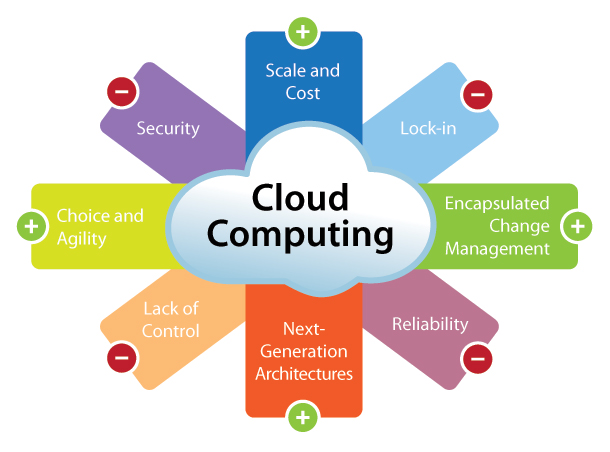
You can’t have a discussion about cloud computing in Malaysia without a heated debate on security and risk.

I have observed 2 root causes of the debate;

1. The cloud democratises large scale enterprise capability coupled with the ability to buy-as-you-need, even small businesses can now leverage on sophisticated enterprise grade IT. In the past, business could get away with low level talent enabling just basic IT services such as accounting, payroll and email. Now in this cloud enabled world of endless useful applications and networks like Facebook, sales force and google apps, even small to medium businesses are able to innovate and have IT capability on par with the global multinational titans. So a gap emerges, while the business units of a company can contract and outsource IT services equivalent to their larger counterparts, they don’t have access to the talent of these behemoths do to plan processes, policies, data governance, integration, architecture and security to manage this level of risk and exposure. The connected world is a two-edge sword, enabling unparalleled access to markets and communities while also increasing exposure to those with malicious intent. So companies can buy services on the cloud but not management. What is missing for Malaysian customers already sold on the commercial benefits of the cloud is someone they can trust and rely on to map their journey and steps to slowly migrate to this opportunity to get more with less.

2. Much of the IT leadership in the Malaysian corporate scene is dominated by technology management rather than actual information and intelligence. The former is the trusted resource to design, build and operate technology to provision assets to achieve limited information and automation goals but the later is a timely asset with an emerging demand. This new breed of CIO equipped with the latest technology and data science know-how and is ready to provide actionable insights to the business to gain a competitive advantage or address new market opportunities. Many vendors selling the cloud attempt to use language that resonates with the later but are selling components that still need to be pieced together by the former. So they end up running up against the wall of vested interest because they are asking the quarter master to reduce his/her scope.

I don’t have an all encompassing mitigation strategy at this point in time, but I suspect the solution will begin from driving more popular apps that will appeal to end users and providing more and more solutions on a Software As a Service or Business Process As a Service coupled by data integration services that will not leave users feeling siloed on your apps. Think about it, what kind of platforms and app stores can you build in your vertical industries that the current technology will enable, economically and securely.


A 4th “I” for IBM’s “The 3 I’s of Smarter Content”

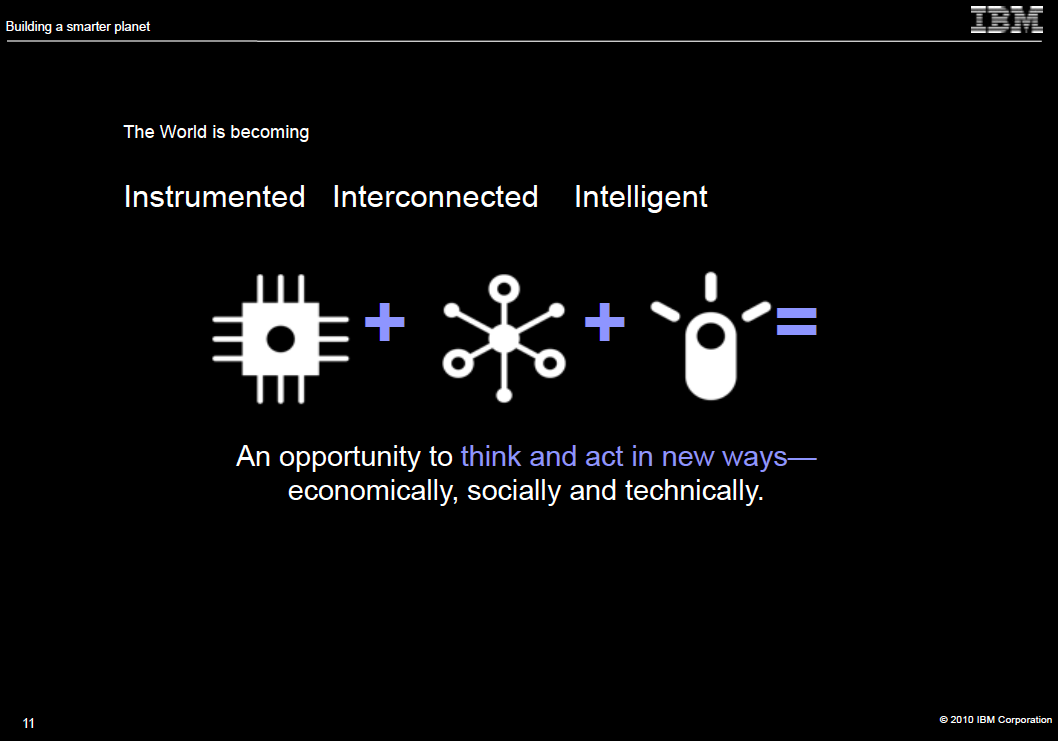
Sometime back, IBM summarized the information revolution as being something that will be enabled by the emerging trend of the 3 I’s. Technology is allowing everything to be instrumented and therefore automated and measured, its allowing everything to be interconnected and with all this data its allowing intelligence to make sense of everything and act on it in real time.

The 3 I's of IBM

The 3 I’s of IBM

The vision is described visually in this slide deck http://goo.gl/2tVDFk and is expounded upon by a professional communicator of IBM here http://goo.gl/bsKBxf so I wont belabour you with the merits of this great framework, rather I will proceed to make this suggestion, that the following trends is the last 5 years;

  • Drones
  • Robots
  • Autonomous Vechiles
  • Brain Computing Interfaces
  • Artificial Intelligence
  • Attempts to reproduce working digital models of human Neuro Anatomy and Machinery

require the edition of an additional I to the 3. That I is ‘Incarnation’. The word best summarises the fact that we are trying to provide a body to our AI to move and exist in the real world. It also captures the fact that we are trying to Anthropomorphise our software to make it seem more human and therefore easier to use and relate to and perhaps form emotional attachment. This incarnation is also now merging the real world and the virtual one, allowing an overlay of knowledge on the real world with technology like Augmented Reality or allowing machines a body to move and interact with the real world through robotics. I am sure the geniuses in IBM can take this concept further then I can.

The more sophisticated your users are…

“Our users aren’t sophisticated enough for such tools, is there a basic option?” 

The more sophisticated your users are, the less sophistication they need from their tools. 

DSC04661


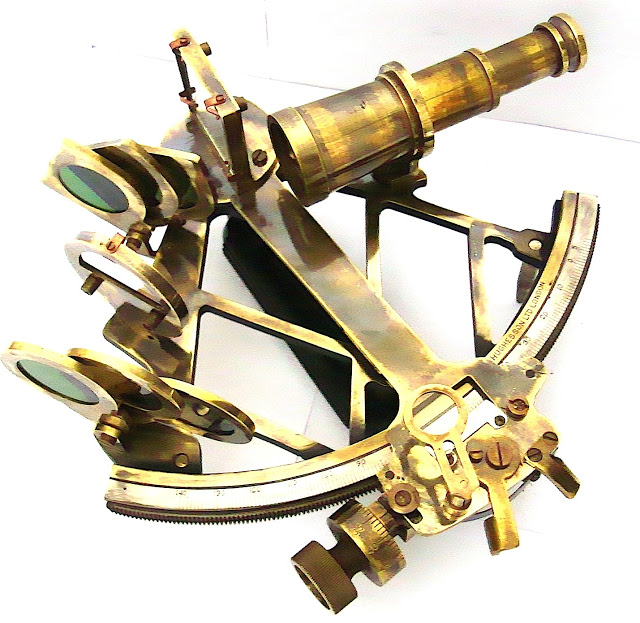
Think of the expert sailors of old, who navigated the seven seas with nothing but outdated print maps and a sextant. Expert level sailors today can still pull this off, but if you just got your first boat its probably going to look more like this;

500x407xoasis-bridge.jpg.pagespeed.ic.cYO2K8cI7e

One button fix all apps are usually needed by the less sophisticated users – which is ironic because these tools cost more as they require a lot of sophistication during the implementation. The modern CIO has to make a judgement call, if your users are simple you need sophisticated vendors, if your vendors are simple, you need sophisticated users.

monkey-typewriter-1

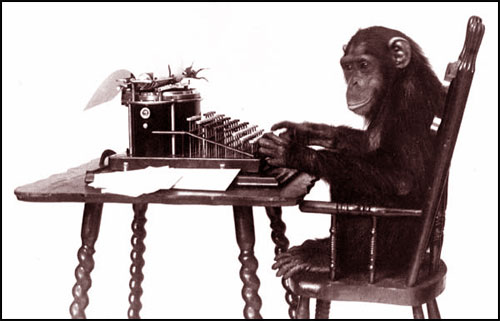
You will end up spending the money anyway – its either going to your payroll or to the contract with the vendors.

Zen: Beaten Paths reveal human behavior

An Architect (civil) friend told me a story about working around human behavior  that has stuck with me over the years and influenced my practice as an Architect of information systems.

The story is about an architect who was looking for a solution to the persistent problem of people not using sidewalks no matter how convenient they were. Eventually the foot traffic wore out new paths on the landscape and would be an eyesore.This architect had an idea, he would build all of his buildings, but defer the sidewalks. He would just plant grass. 6 months later he would come back and put sidewalks down where all the beaten paths emerged. By doing this he put the paths in the places that emerged from unpredictable trends of human behavior. This was the failure of all his counterparts, they were trying to predict those trends, and often got it wrong.

3184420588_9e6335b73e_b

The principle that I applied to my field of work is to leave interfaces and parts of information systems to the trends that emerge, rather than trying to dictate something that people wont use. The modern enterprise is a combination of policies, processes and services that have been designed top down, but they should meet grassroots movements and trends halfway, for maximum impact.

The story also carries a fashionable new big data lesson – if we can understand trends we can capitalize on actual human behaviour, rather than our inaccurate traditions of conjecture.